



BIS revising national flag standard, may allow flags as large as 9,000 mm x 6,000 mm
The national standard for the flag, IS 1:1968, has been revised thrice since it was first notified — in 1951, 1964 and 1968. It is currently being revised again

New Delhi, Aug 14 (PTI) The Bureau of Indian Standards (BIS) is revising the quality specifications for the national flag to permit larger flag sizes and update colour measurement norms, a senior BIS official said on Friday.
The national standard for the flag, IS 1:1968, has been revised thrice since it was first notified — in 1951, 1964 and 1968. It is currently being revised again, along with two related standards governing flags made of silk khadi (IS 300:1968) and wool khadi (IS 400:1968).
“IS 1:1968 is currently under revision, along with the related standards for the national flag made from silk khadi and wool khadi,” the official told PTI, adding that the aim is to bring the standards in line with current practices while preserving the flag’s essential identity and characteristics.
PROVISION FOR VERY LARGE FLAGS
Among the key changes under consideration is a provision for very large flags — up to 9,000 mm × 6,000 mm — intended for use at expos, international events and other large public installations.
The revision will also update how colours are measured. The existing parameters for trichromatic coordinates and brightness percentage for India Saffron, White and India Green are being reviewed in keeping with current colour-measurement practices, the official said.
Certification to the flag standard is currently voluntary, and six licences have been issued so far, according to BIS.
ABOUT THE STANDARD
IS 1:1968 lays down the design, construction and material specifications for the National Flag made of hand-spun, hand-woven cotton khadi bunting, and prescribes nine standard sizes depending on the flag’s intended use — from a 450 mm × 300 mm flag for VVIP aircraft to a 150 mm × 100 mm flag for table display.
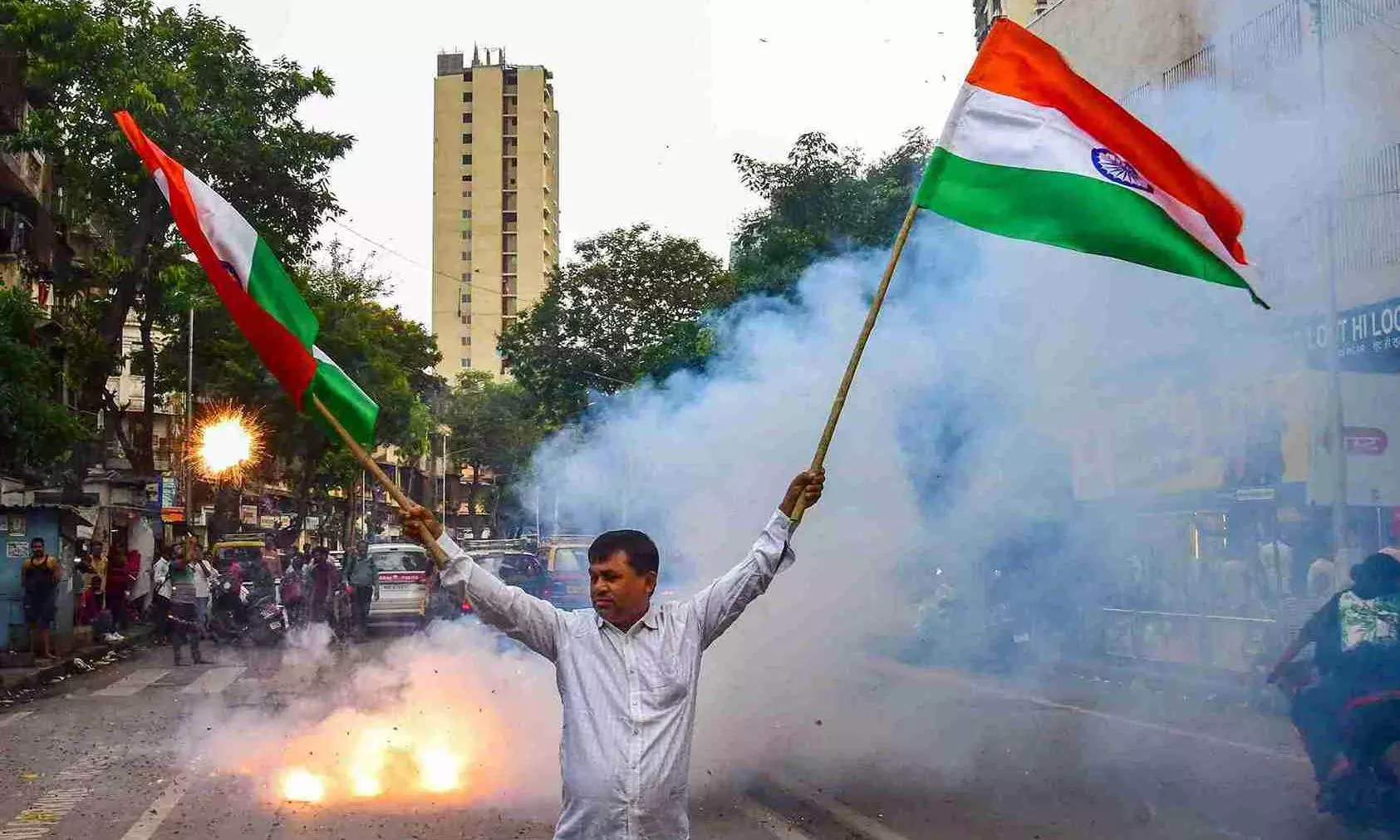
The Tricolour’s design was adopted by the Constituent Assembly on July 22, 1947. Its top saffron band signifies strength and courage, the white middle band represents peace and truth and carries the Ashoka Chakra, and the green band at the bottom denotes fertility, growth and the auspiciousness of the land. The width-to-length ratio of the flag is fixed at two is to three.
The navy-blue Ashoka Chakra at the centre of the white band is modelled on the wheel atop the Lion Capital of Ashoka at Sarnath, and has 24 spokes. As per the standard, it must be screen-printed, printed, stencilled or embroidered, and remain fully visible on both sides of the flag.
In keeping with the flag’s link to the freedom movement, the standard mandates that it be made from hand-spun and hand-woven cotton khadi bunting. PTI