







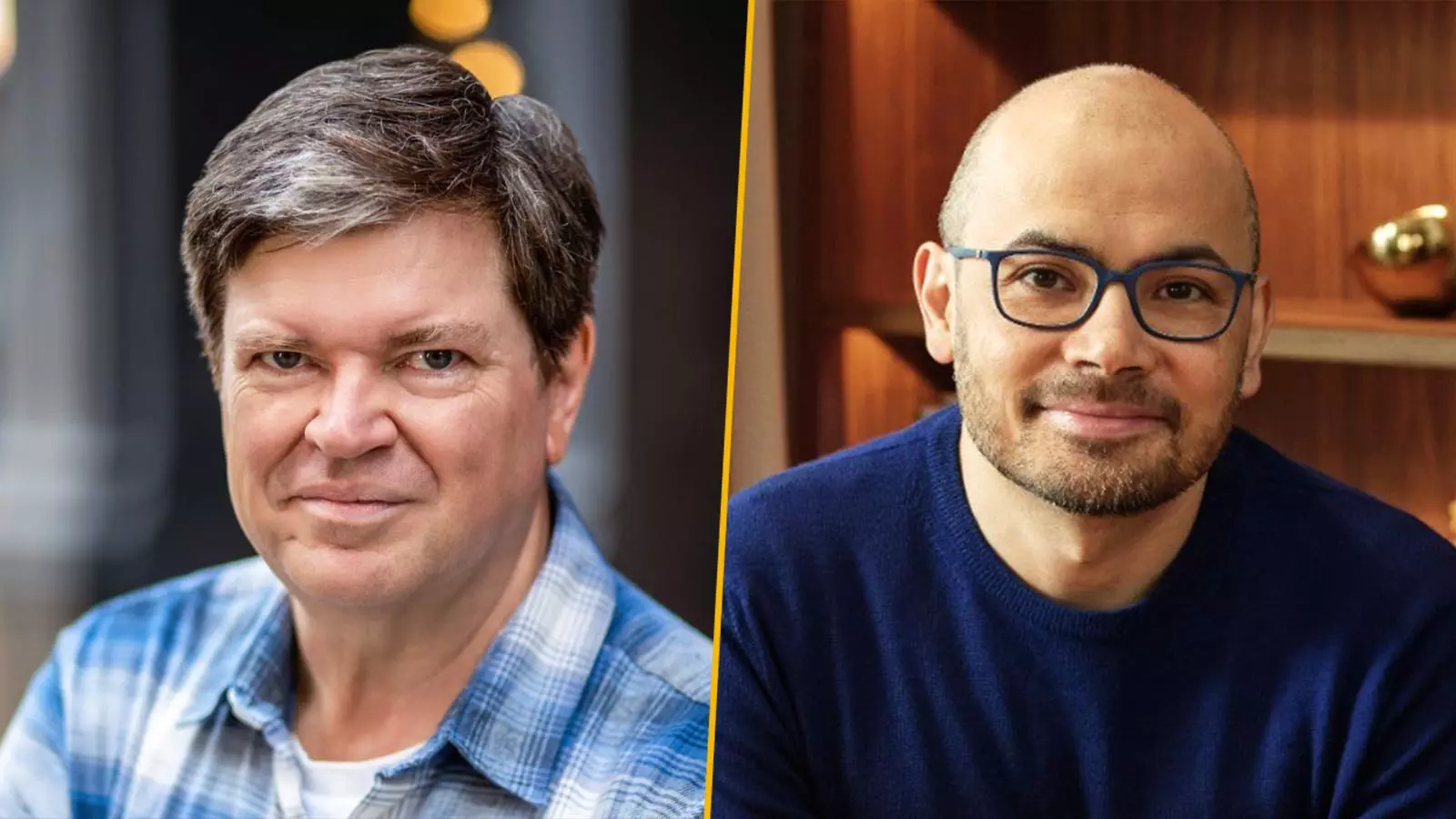
Former Meta AI chief Yann LeCun (left) and Google DeepMind CEO Demis Hassabis (right) spar over whether human intelligence is truly general or highly specialised?
AI titans Demis Hassabis, Yann LeCun clash over meaning of 'general intelligence'
Google DeepMind CEO Hassabis argues that AI can achieve human-level generality, a view supported by Musk, while Meta’s LeCun dismisses the concept as misguided

Google DeepMind CEO Demis Hassabis and former Meta AI chief Yann LeCun have clashed over the meaning of general intelligence and whether artificial intelligence can ever match human capabilities.
Also Read: Google boss Sundar Pichai cautions against blindly trusting AI
The exchange has, unsurprisingly, attracted X owner Elon Musk, who voiced his support for Hassabis. Hassabis maintained that while neither humans nor machines are perfectly optimal, both are sufficiently general to learn an enormous range of tasks.
Reacting to Hassabis’s position, Musk responded briefly on X stating, “Demis is right”.
Debate on AGI
The disagreement centres on AGI, or artificial general intelligence, a term used by companies such as OpenAI and Google to describe a level of intelligence comparable to that of humans.
The idea behind AGI is that tools like ChatGPT and Gemini could one day possess “general intelligence” akin to humans.
This would allow AI systems to tackle problems they have never previously encountered, learning and adapting in real time rather than relying solely on prior training.
At present, however, AI systems such as ChatGPT are far from achieving this vision. While they can solve complex exam papers and even perform at Olympiad level in mathematics, their overall intelligence still falls short of that of a young child in many everyday situations.
This gap between what AI systems can and cannot do prompted LeCun’s remarks, which sparked the debate with Hassabis.
LeCun dismisses concept
Speaking recently about machine intelligence, LeCun argued that there is no such thing as general intelligence at all, not even in humans.
He maintained that human intelligence is highly specialised, shaped by biology and evolution to deal with specifically human challenges.
Because of this specialisation, LeCun said, individuals tend to excel in different areas; not everyone can be a mathematical prodigy or an accomplished writer.
He illustrated this point using chess, noting that while machines can calculate millions of possibilities in seconds, even elite players such as Magnus Carlsen can analyse only a limited number of moves.
Also Read: Microsoft plans to double its data centre footprint in 2 years amid AI boom
LeCun has also expressed scepticism about attempts to build human-like intelligence by simply feeding vast quantities of data into computers. Instead, he advocates a more holistic approach that would equip AI systems with longer memory and richer sensory inputs.
Hassabis pushes back
These remarks, effectively dismissing the pursuit of AGI as misguided, drew a sharp response from Hassabis. The Google DeepMind chief argued that LeCun was “confusing general intelligence with universal intelligence”.
According to Hassabis, the human brain is one of the most complex and broadly capable learning systems known.
While no finite system can escape biological or physical limits, he contends that humans do possess general intelligence, and that AI systems can, in principle, achieve the same.
To support his view, Hassabis pointed to the concept of the Turing Machine, a theoretical computer capable of unlimited computation given infinite resources.
He argued that human brains are approximate biological versions of such machines, and that modern AI foundation models are increasingly approaching this level of generality.
Musk backs Hassabis
Musk too has long argued that the emergence of superintelligent AI is a question of when, not if, while also warning about its risks.
Also Read: Elon Musk predicts AI will replace all jobs, ‘working will be optional’
Despite the exchange, LeCun has not retreated from his stance. In a follow-up response, he clarified that much of his objection is about the language used to describe AI.
“I object to the use of ‘general’ to mean ‘human-level’, because humans are extremely specialised,” he stressed.