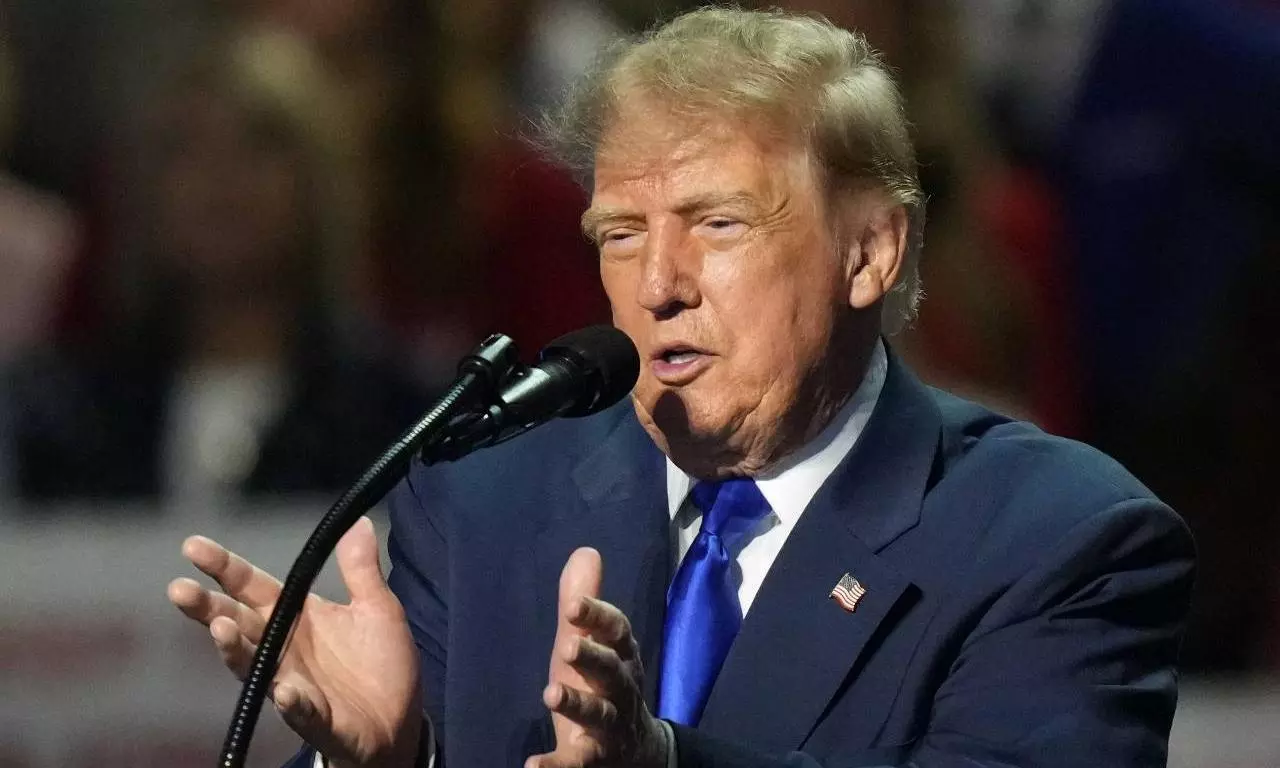
Trump’s 17 pc tariff offer to India: Deal or pressure tactic?
As the US ties lower tariffs to a trade deal, India must balance export gains against concessions in agriculture, manufacturing and other key sectors

The latest US tariff threat has once again put India’s trade ties with Washington on uncertain ground. US President Donald Trump’s proposal to impose duties of up to 25 per cent on Indian goods comes even as the two countries are negotiating a trade agreement. Washington has dangled the prospect of a flat 17 per cent tariff on Indian imports if a deal is sealed.
Is the lower tariff an offer India can afford to refuse, or another pressure tactic to push New Delhi into accepting US demands? The question is particularly relevant after the Republican defeat in the midterm elections in the US failed to alter Trump’s determination to use tariffs as a negotiating tool.
Unpredictability of US trade policy
Opinion in India is divided over the offer. While a 17 per cent tariff could give Indian exporters an advantage over competitors, the unpredictability of US trade policy remains a concern.
“The tariff offered gives India an advantage over many competitor countries for exports to the US. However, the US economic posture is unpredictable,” says Ashok Malik, Partner and Chair of the India Practice at The Asia Group, a Washington-based business and strategic advisory firm.
Also Read: US proposes 25 pc tariff on India over excess-capacity claim; New Delhi rejects rationale
The bigger question, he says, is “how permanent the tariff number is, and how quickly could Trump unilaterally change his mind”. That is a problem that not just India but every country dealing with the unpredictable US President has to consider.
Complicated negotiation for India
For New Delhi, the tariff offer is only one part of a much more complicated negotiation. Anil Wadhwa, former Indian ambassador to Italy, says the US is seeking concessions in agriculture and manufacturing that could prove difficult for New Delhi to accept.
India’s average agricultural tariff is 33 per cent, compared with 5 per cent in the US, he points out. The US is also seeking lower duties on products such as soya, alcohol, and tree nuts, while concessions on dairy imports could set a precedent for other trading partners.
Wadhwa argues that India needs to consider the wider implications of the deal, including the possibility of further US tariffs on imports. Unless the contentious issues are resolved, the agreement itself could come under pressure.
Also Read: India-US trade deal nearing ‘finish line’, says Jaishankar
In its reaction to the news from Washington, the government has taken note of a US notice seeking comments on an investigation into alleged excess production capacity in manufacturing sectors in 14 economies, including India. The notice, issued by the US Trade Representative (USTR), is currently under examination.
India has participated constructively in the investigation and maintained that it does not have excess production capacity in any sector.
New Delhi has also made it clear that trade-related concerns should be addressed through the ongoing negotiations for a bilateral trade agreement with the US.
Should India delay signing a deal?
Brahma Chellaney, India’s well-known strategic analyst, wrote on X, ”Signing the US-India bilateral trade agreement (BTA) with an unpredictable Trump Administration that keeps shifting the goalposts would be almost a fool's errand for India.’’
“The Indian government needs to decide if signing the deal before the end of the year and giving the American president a win is worth it. Or whether it is preferable to wait for the new Congress and see if tariffs are lowered next year,’’ says Aparna Pande of the Washington-based Hudson Institute.
Also Read: India-US trade deal: Piyush Goyal says first tranche finalised
For New Delhi, the challenge is not simply to secure a lower tariff rate, but to ensure that the concessions it makes are worth the economic and strategic cost. India will also have to consider this against the background of overall bilateral strategic ties with the US. New Delhi is looking for both foreign direct investment and technology from the US to help the India growth story. All these considerations will come into play when India wraps up the trade agreement with the US.