Sri Lanka raises judges’ retirement age, faces judicial independence row
Legal bodies and civil society oppose the government’s plan to extend judges’ tenure, while ministers cite efficiency and case backlogs as justification for the move

Sri Lanka is waging a full-blown internecine war -- over the retirement age of judges.
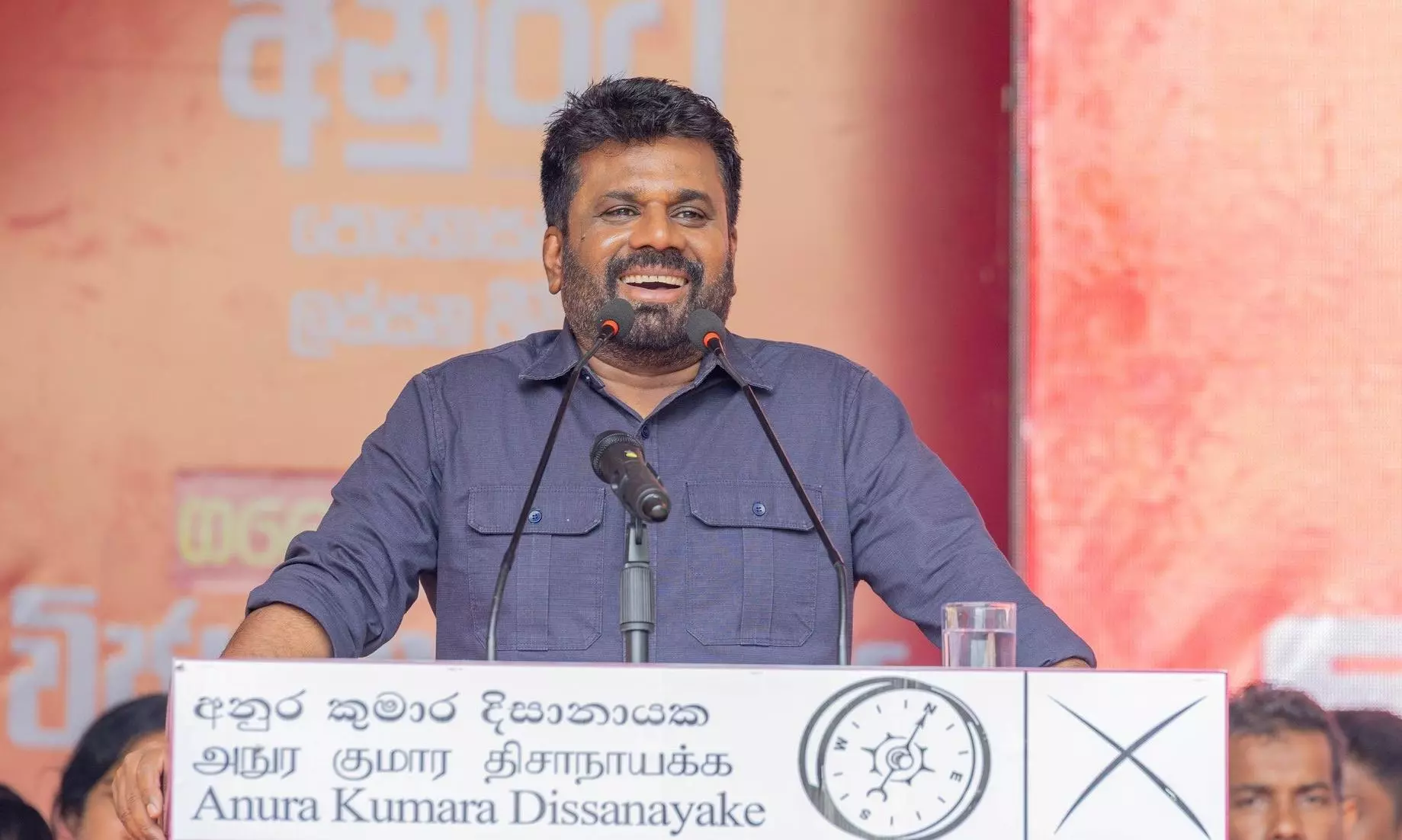
For the first time since it rode to power in 2024, Marxist President Anura Dissanayake’s government is pitted against virtually the rest of the country over its controversial decision to hike the age when judges will call it a day.
The cabinet has approved a widely-flayed proposal to increase the mandatory retirement age of judges by two years – in the Supreme Court from 65 to 67, in the Court of Appeal from 63 to 65 and proportionately for lower courts.
Govt defends controversial move
The move – which will involve a constitutional amendment – has been denounced by opposition parties, legal bodies and civil society groups, who allege that the government’s aim is to make the judiciary pliable.
Also read | Sri Lanka Tamils fight to regain land army seized long ago: 'This govt too playing tricks'
Despite the widespread backlash, including from outside Sri Lanka, the government has stoutly defended its stance, saying it is the only way to tackle the huge backlog of more than one million pending court cases.
Government leaders say the changes will bring about systemic efficiency, along with parallel efforts to fill vacancies in lower courts, which account for the bulk of the accumulated backlog.
The Janatha Vimukthi Peramuna (JVP), which holds the driver’s seat in the government as the core of the ruling coalition, says the issue does not need a public referendum.
Supporters also say the plan would retain experienced judges and improve court efficiency.
Critics question govt motives
The critics differ – and are loud and clear. They say that such sudden extensions without mass approval undermine public trust in the judiciary and lead to charges that the government wants to favour some individuals.
Lawyers argue that an across-the-board two extra years for judges does not resolve the crippling staff shortages, structural delays, fewer courtrooms and the notoriously low judge-to-population ratio that have systematically failed the judicial ecosystem in Sri Lanka.
Former foreign minister GL Peiris, among the loudest opponents of the government plan, warns this could lead to similar demands over retirement age from public sector employees, university academics and medical specialists, among others, he said.
Crucially, he flayed the government for going ahead despite opposition from almost everyone. “This shows the government’s insensitivity. In other countries they would have held extensive discussions,” Peiris told The Federal. “Here the whole thing has been done in secrecy. No discussion, no transparency.
“This shows there is a hidden motive. The stated motive is not the real motive. Clearly, it is aimed at retaining the services of one person in the Supreme Court.”
Legal bodies oppose tenure extension
The Bar Association of Sri Lanka (BASL) has said the extension was never a part of public policy discussions or legal sector reforms until the media first reported the government plan.
According to its president Rajeev Amarasuriya, uncoordinated changes to judicial tenure could risk eroding the independence of the judiciary, which serves as a vital check on executive and legislative power.
Even the Judicial Service Association, which represents district judges and magistrates, has come out against the decision.
The Colombo High Court Lawyers Association told President Dissanayake that judicial independence was not just a constitutional aspiration but the bedrock on which the rule of law and legitimacy of democratic governance rested.
Also read | Sri Lanka’s ‘no’ to bridge with India fuels counter: 'Would raise mutual dependence'
“Any measure that has the effect, directly or indirectly, of altering the tenure and conditions of service of sitting judges of the Supreme Court must be subjected to the most exacting constitutional and jurisprudential scrutiny,” it said in an open letter.
The International Association of Judges has thrown its weight behind the critics and urged Sri Lanka to reconsider the move.
The digital media is a house divided. Pro-government supporters are fully supportive of the changes and say the JVP-led coalition enjoys a popular mandate.
Wrong, critics retort, saying the JVP-led National People’s Power (NPP) alliance never mentioned the proposal in its election manifesto and was now thrusting its idea on the country without any wider approval.
NPP leader challenges judicial changes
Embarrassingly for the government, a senior member of the NPP coalition’s leadership council, Lal Wijenayake, has come out openly against the change after he failed to persuade the government – President Dissanayake included – not to court disaster.
A veteran leftist and a lawyer, Wijenayake has warned that the tinkering with the retirement age would undermine judicial independence. “Judicial independence is essential to establish a civilised country. One of the pillars of judicial independence is that during the period of service of judges, their service conditions should not be interfered with.”
Piqued by his outburst, Agriculture Minister and JVP Politburo member KD Lal Kantha reportedly told Wijenayake to keep quiet. The latter has refused to.
The incumbent government is not the first to resort to actions that critics say amount to undermining the judiciary. Some previous Sri Lankan presidents have been more brazen – but they ultimately paid a heavy political price.
Of the more than one million cases pending in Sri Lanka’s 293 courts, only a tiny fraction is before the Supreme Court. A whopping 8,06,000 cases are in the Magistrate Courts and another 2,60,000 in District Courts. These courts always remain crowded, and cases can drag on for endless years.
To add weight to the criticism, the government had originally planned to increase the retirement age of only Supreme Court judges, triggering charges that it wanted to retain one judge poised to retire soon. Officials denied this.
Govt presses ahead despite criticism
As attacks mounted, the government extended the retirement age hike to all courts.
A Colombo-based Tamil lawyer, who did not want to be named, asked: “What happens if a future government wants to bring down the retirement age to get rid of inconvenient judges? When will this game stop?”
Critics say there would have been no criticism if the government had pushed up the retirement age of judges from a future date, not applicable to those close to leaving the bench.
Lawyers underline that the constitutional provisions governing the working conditions of judges of superior courts are not bureaucratic arrangements but vital to safeguarding judicial independence.
Also read | Sri Lanka placing roadblocks on Tamil refugees’ return from India
Once this judicial architecture is altered to benefit incumbent judges, people are bound to lose confidence in the fairness of the justice they can expect.
But the Dissanayake government is determined to go ahead as it commands a two-thirds majority in the 225-member parliament.
Justice Minister Harshana Nanayakkara denies the move threatens judicial independence.
“The judiciary must become more efficient, just like other systems. Increasing the retirement age of judges is one aspect of improving efficiency,” he said. “We are intervening in several other areas as well.”
Echoing the legal fraternity, however, former foreign minister Peiris warns that the change “will do irreparable damage to the institution of the Supreme Court. It will be embroiled in controversy. It will affect its impartiality.”