Three years after October 7 Hamas attack, has Israel become any safer?
The Hamas attack exposed intelligence and strategic failures, while the war left Gaza devastated and Israel facing a diplomatic reckoning

For years, Gaza had effectively been an open-air prison, sealed off, heavily controlled, and periodically attacked by Israeli forces. Life was hard for the people of the enclave even before the Hamas attack: Israeli blockades, restrictions on the movement of people, and large-scale unemployment. The future looked equally bleak for the two million people living in cramped conditions in Gaza.
Yet on October 7, 2023, it was Israel that suddenly found itself exposed and vulnerable. As many as 1,200 people were killed, and over 250 were kidnapped and taken to Gaza.
Where did Israeli intelligence fail?
Israel is a security state that uses high-end technology to guard against infiltrators, with excellent surveillance and every apparatus in place to ensure that there is no breach. Yet its renowned intelligence services, Mossad and the Shin Bet, failed to protect Israeli citizens that fateful morning.
Israeli intelligence had gotten so accustomed to beating down Palestinians in the Gaza Strip that they were unwilling to believe that Hamas could carry out such an audacious act. Or perhaps they had become complacent.
Shocking as it may sound, the Hamas battle plan, codenamed the Jericho Wall by Israeli intelligence, was known to them nearly a year before October 7.
Also read: Hamas’s Oct 7, 2023 attack tactically brilliant, strategically foolish
The 40-page document had a detailed blueprint outlining the multi-pronged invasion of southern Israel with an initial barrage of rockets, the use of drones to disable security cameras on the border, and mass infiltration by Hamas fighters on paragliders and motorcycles; all of this was known, including the attempt to take Israeli hostages. What was not known was the timing.
When Hamas was miscalculated
Despite all this information, Israeli officials were not convinced that Hamas could execute the blueprint. Their reading was that Hamas' interest lay in controlling Gaza. A power struggle after the 2006 elections led to Fatah, the secular political party ruling the Palestinian Authority, being driven out of Gaza. By June 2007, Hamas was in full control of the enclave.
Israel was delighted by the turn of events. Strengthening Hamas in Gaza while weakening the Palestinian Authority in the West Bank would serve the Zionist state better than a united Palestinian political force. So Hamas was a faction with which Israel could do business.
According to Palestine’s ambassador in India Abdullah Mohammad Abu Shawesh, “Netanyahu officially requested Qatar to provide substantial financial support to Gaza, approving and facilitating the transfers.”
Netanyahu’s strategy since taking office was to contain Hamas, manage Gaza rather than resolve the Palestinian question, and use military superiority and economic pressure to keep the conflict below the threshold of a larger war. But the deadly attack shattered the assumption that Hamas could be managed.
October 7 failure
October 7 was also the failure of the Israeli state. As already stated, the information was available but it was misread or discounted. Even in the hours before the attack, unusual Hamas activity was detected, but the border was not placed on full alert.
Recent reports that Netanyahu received warnings from Egyptian and Emirati intelligence before October 7 have added another layer to the debate.
Also read: Hamas attack not a ‘licence’ to dehumanize Palestinians, US tells Israel
According to an explosive report published in Haaretz, one of Israel’s well-respected English-language dailies, UAE President Mohammed bin Zayed had warned Netanyahu of a possible major Hamas action. Netanyahu's office has categorically denied that such a conversation took place. According to the paper, Netanyahu, for some inexplicable reason, kept the information to himself and did not pass it on to his senior army commanders.
The cost of war
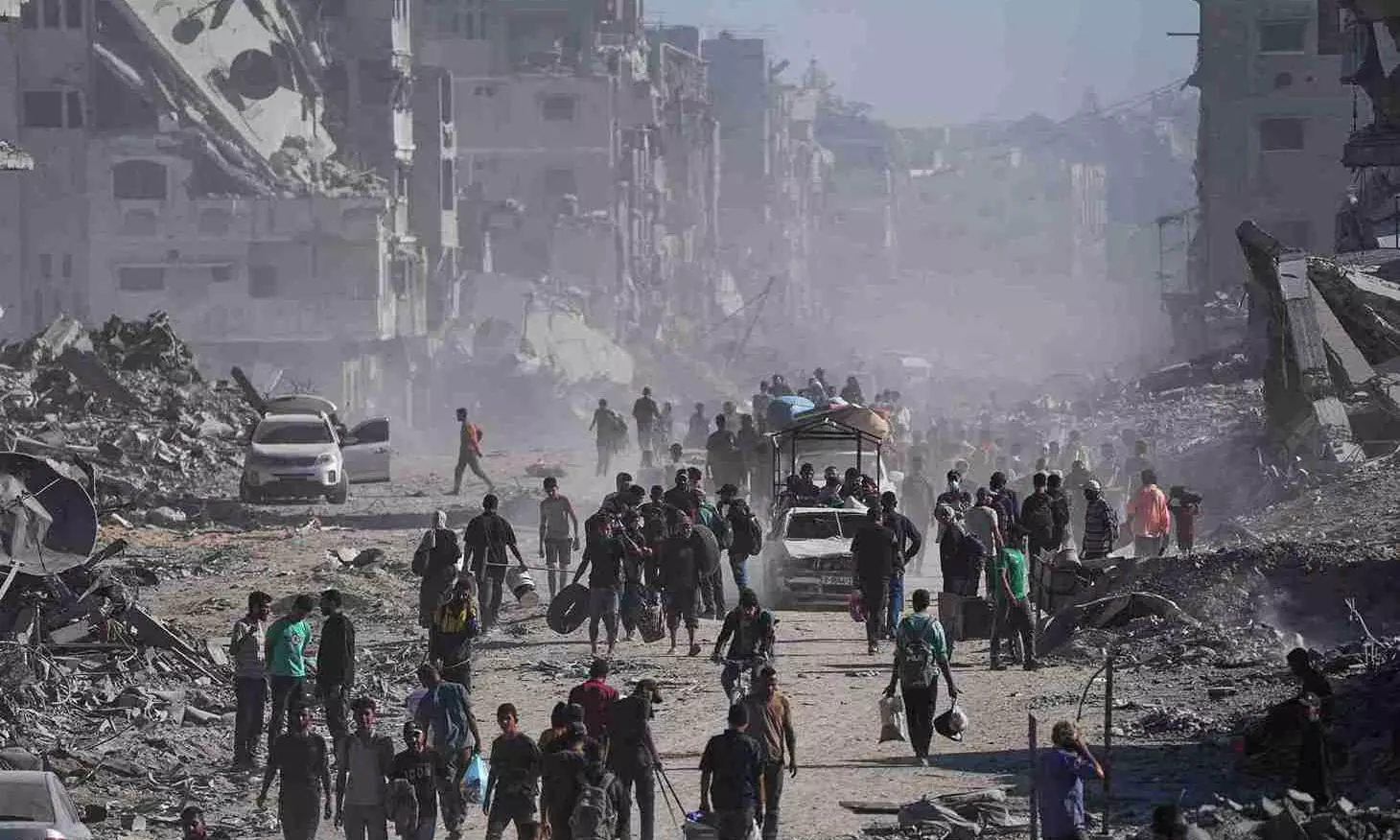
The retaliation to October 7 was a devastating demonstration of Israeli military might and ruthlessness. Israel emerged as the foremost military power in the region, completely wiping out the entire political and military leadership of Hamas, who dared to challenge the Jewish state. Gaza was reduced to rubble, 74,000 people killed, including children and women.
The initial rush of sympathy for Israel evaporated within months as videos of IDF action flashed around the world. Israel’s brutality, its refusal to abide by the conventions of war laid down by the Geneva Convention, led to allegations of genocide. The International Criminal Court indicted Netanyahu and issued a warrant of arrest against him. Today, Israel has few friends, and more importantly, it has lost substantial support among many sections of Americans.
Diplomatic fallout
There was also a diplomatic price to pay. The Abraham Accords brokered by Donald Trump’s son-in-law Jared Kushner were aimed at giving Israel legitimacy in the region.
The UAE and Bahrain were the first to sign up and establish normal relations with Israel in 2020. Morocco followed, so did Sudan and Kazakhstan.
The prize, however, was Saudi Arabia, by far the most important Sunni power in the Gulf region. Crown Prince Muahmmad bin Salman or MBS was keen to do so. But the Hamas attack stopped the move. While the ruling family may have gone ahead with it, popular sentiment in the mosques and bazaars of the kingdom stopped the rulers from going against public wishes.
Also read: What is Hamas? What’s its beef with Israel?
So despite its brilliant military success, the more important question, three years on, is whether that power made Israel safer?
The answer is no. The war demonstrated Israel's extraordinary capacity to destroy, but not its ability to create lasting security.
No long-term vision
Netanyahu’s biggest failure is a lack of a long-term vision beyond military success. Israel cannot be in a state of perpetual war and has to make peace at some time. Netanyahu was vehemently opposed to the 1993 Oslo Peace Accord. After October 7, more and more ordinary Israeli citizens believe that they cannot live in peace with Palestinians. Like Netanyahu, the Israeli political opposition opposes the two-state solution.
Israel backers like the US and its Western allies need to ensure that appeasing Israeli sentiments without justice for Palestinians cannot ensure stability in the wider Gulf region.
Until Israel comes to terms with giving Palestinians a fair deal, no lessons will be learnt after these three disastrous years since the Hamas attack. On its part, the Hamas attack brought nothing but suffering to the people of Gaza.