Maharashtra civic polls turbocharge BJP’s and Fadnavis's march to 2029
While Modi and Shah have one treasury to bank upon, Fadnavis has quietly built his war chest over past decade in Mumbai and across the state to back himself up

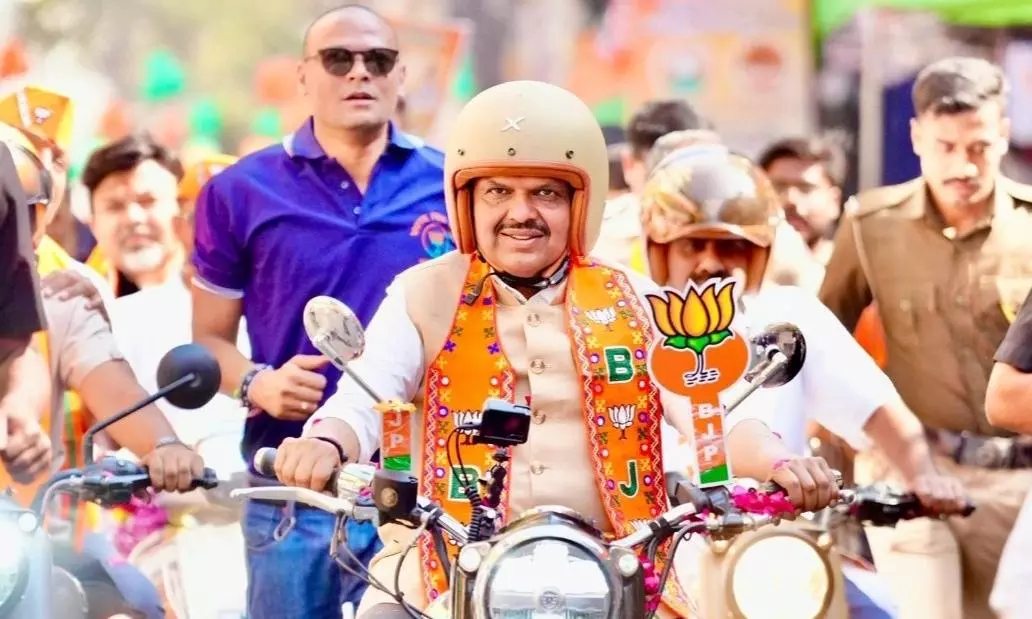
The Maharashtra urban local body elections, held after a four-year delay, have underscored the BJP’s unequivocal dominance. The results not only follow on from its victory in last year’s Assembly elections but also show how the party has effectively tamed its coalition partners, Eknath Shinde-led Shiv Sena and Ajit Pawar-led NCP, both of which share power with it in the state legislature.
Together, these outcomes have decisively stamped Chief Minister Devendra Fadnavis’s authority and catapulted him into the ranks of the BJP’s future prime ministerial aspirants.
Also read | Maharashtra civic polls not a saffron-wash; BJP has reasons to worry, rivals have hope
Traditionally, local bodies tend to swing in favour of the ruling regime, since the funds are intrinsically tied to the state’s whims and will. The only test that remains is elections to the rural local bodies, the district and panchayat councils, due soon. Together, they will reset equations for the 2029 Parliament election.
What the verdict really signals
The decisive verdict in the municipal council, municipal panchayat, and corporation polls was not merely about who won how many seats — the BJP secured 50 per cent of the total, with the remaining parties and independents jostling for the rest. More importantly, it was also a stress test of political capacities, underscoring how power is being reorganised in a changed political milieu, from the ground up.
In the process, the BJP has clinched most municipal corporations including Mumbai's cash-rich Brihanmumbai Municipal Corporation (BMC), dominated by the Thackerays for close to 30 years.
What unfolded was not a conventional contest between rivals but a clear show of asymmetry: of resources, organisation, coherence and intent. The implications of this imbalance extend far beyond the municipal limits and raise uncomfortable questions about the future of opposition parties that are no match to the BJP’s hunger for power at all levels, for which it is willing to go to any length by deploying ruthless strategy, money, machinery, and hard work.
Ruthless political manoeuvre
Just rewind to 2021. In the middle of the second wave of COVID-19, the BJP enacted its ruthless political manoeuvre — it first split the Shiv Sena by luring Shinde into its fold, toppling the Uddhav Thackeray-led Maha Vikas Aghadi (MVA) government in Maharashtra. Two years later, it cut the NCP into two. The BJP had money and institutions at the Centre to do that. The party knew it wouldn't stand a chance against a united Opposition in the state, and so it broke it into pieces.
It was a muddied political scenario with two regional players splitting and a beleaguered Congress party considerably weakened by profuse desertions, lack of a cohesive strategy, zero fighting appetite, and lack of resources.
The BJP came across to voters as the only serious option, visible across the state, loud in its canvassing, colourful on billboards, and projecting the confidence of a dominant political force. The other parties just splintered away.
Entering the local body elections with full might, the BJP came across to voters as the only serious option, visible across the state, loud in its canvassing, colourful on billboards, and projecting the confidence of a dominant political force. The other parties just splintered away.
It was Fadnavis single-handedly micro-managing the show across the state, virtually relegating his own party stalwarts to the fence.
BJP’s shadow state in cities
For the BJP, local body elections are no longer low-stakes civic exercises. This was operational rehearsal, managed centrally from Mumbai, snatching from its own local workers any incentive they enjoyed previously. They had no say in anything that was unfolding before them.
Fadnavis and his team would now oversee every single local body and its functioning. The reasons are clear: municipal institutions control contracts, no-objection certificates (NOCs), land-use patterns, housing permissions and are an interface between an aspirational voter and the state.
These spectacular victories allow the BJP, and Fadnavis, to build a parallel political economy, a shadow state that operates regardless of turbulence or instability in legislative coalitions. They also smoothen the takeover of the large public projects by one or two big business houses.
In a rapidly urbanising state, the BJP strategy is to polarise the voters, trumpet its administrative capacity over ideological nuance, and keep the rival parties and its own allies fragmented.
Choice of voters
It is no surprise that many voters in Maharashtra saw the BJP as the only party capable of delivering quickly and at scale. Its ideological position often sidelines the state’s human development challenges, agrarian distress, and growing joblessness and financial uncertainty, while its plank of vikas (development) builds buoyancy and a feel-good factor among voters.
That the Opposition played on the tune set by the BJP is an understatement. It was competing in a futile way on that turf, while unable to raise the bread-and-butter and civic issues of the common man.
Voters across the state could see this asymmetry clearly, stark as the sun, but the BJP turned it into political messaging to convince them — in effect saying, “No one has the money or might that we do.”
Also read | BMC results dent Sena (UBT)’s power base, but ‘Brand Thackeray’ survives in Mumbai
Gossip about the BJP distributing money strategically to voters does not explain its sweep. What it ignores is this: the BJP deployed an entire election ecosystem, from booth-level micromanagement and transport logistics to legal preparedness, digital messaging and hammering, and saturation visibility campaigns. The BJP fought the local elections as if they were a national event, not an episodic one.
Election as an institution
Why did this matter? Because the Opposition did not merely spend less, it operated differently, in a hackneyed way. Fragmented campaigns, individual glory-seeking, inconsistent messaging, all of which made most opposition parties invisible in the civic space. This election was not a contest of local party workers trying to persuade their neighbourhoods, but one of organisational capacity.
When one party fights elections as a permanent institution and others as ad-hoc coalitions, can electoral competition remain meaningful? That’s the central question going beyond the state.
Of course, this was Fadnavis’s project, given that he had a major stake in elevating himself to the undisputed number one spot, signalling to both Narendra Modi and Amit Shah that their bet on Eknath Shinde is shallow, and that while he is not in a hurry, he is the boss in Maharashtra.
While Modi and Shah have one treasury to bank upon, Fadnavis has quietly built his own war chest over the past decade or so in Mumbai, across the state, and beyond, to back himself up.
Autonomy over anarchy
The elections are also a commentary on the state of the Opposition in Maharashtra.
An embattled Congress won three corporations and several small urban local bodies, and put up a decent show in a couple of others, but its performance elsewhere, including in Mumbai, was lacklustre. There is a reason for that. The party organisation is in tatters; it has lost all its known faces to the BJP or the Shinde-led Sena over the past decade or so.
Yet it finished as the main opposition party, a distant third behind the BJP and the Shiv Sena, a signal that by accommodating sub-regional players and reworking a common MVA framework, the Congress can and must claim space as the principal Opposition party. Both regional parties, the NCP and the Shiv Sena, have lost considerable ground, as these elections show. The Congress now has time to rebuild, with the Lok Sabha and Vidhan Sabha elections three years away.
Thackerays and Pawars
Uddhav Thackeray and his estranged cousin Raj came together on the eve of the elections but failed to emerge victorious. The Thackerays have, however, secured enough seats (72 altogether) to fight for another day.
The biggest loser was Sharad Pawar’s NCP, battered almost everywhere, including in its home turf of Pune district. As Sharad Pawar stayed away from the campaign and handed over the baton of his faction to his daughter, neither his nephew Ajit nor his daughter Supriya could shine.
Their heavy losses in Pune and Pimpri Chinchwad to a resurgent BJP leave the junior Pawars with little chance of a fightback. With only a shrunken Maratha vote behind them, the writing is on the wall.
In other corporations, they finished as also-rans. They have no heft without the patriarch.
Collapse of Opposition coherence
The two NCP factions appear to be in talks about fighting rural local body polls on a common symbol, an idea that suggests Ajit Pawar might finally be taking over both outfits. But the post-Sharad Pawar scenario does not bode well. Ajit is already allied with the BJP, and the BJP may not need him in the next Lok Sabha and Vidhan Sabha elections.
The biggest surprise was the Asaduddin Owaisi-led AIMIM, which won close to a hundred seats. Its ploy to mobilise Muslims and lower-rung Scheduled Castes paid off. Muslims strategically backed fresh AIMIM candidates, but Muslim and Dalit votes split among opposition parties and helped the BJP in several constituencies, as the Congress neglected its base.
Also read | BMC mayor race intensifies amid power play between rival Sena factions
The Opposition’s campaign was marked by what was called “local autonomy”, independent decisions by Congress, NCP and rival Shiv Sena units. In reality, it slipped into incoherence. Voters were left guessing who stood with whom, and workers campaigned without clarity on symbols, partners or post-poll strategy. Autonomy without coordination, these polls revealed, is not decentralisation. It is drift.
Where to from here for MVA?
The municipal verdict poses a deeper question: Sans a strategy or a common alternative political vision, can the MVA survive from here until the next Assembly election, and can the alliance function as a political alternative outside moments of electoral compulsion?
Without shared processes, coordinated strategies, and protection of local leadership, the MVA risks becoming a top-heavy arrangement, activated during elections but absent in everyday life.
If the Opposition does not rebuild locally, Maharashtra’s future elections will be decided long before ballots are cast.