EC dissent row: How RTI can unlock minutes, orders on SIR decisions
RTI can help citizens and political parties seek the documentary trail behind reported EC dissent, decisions on electoral rolls, and database management

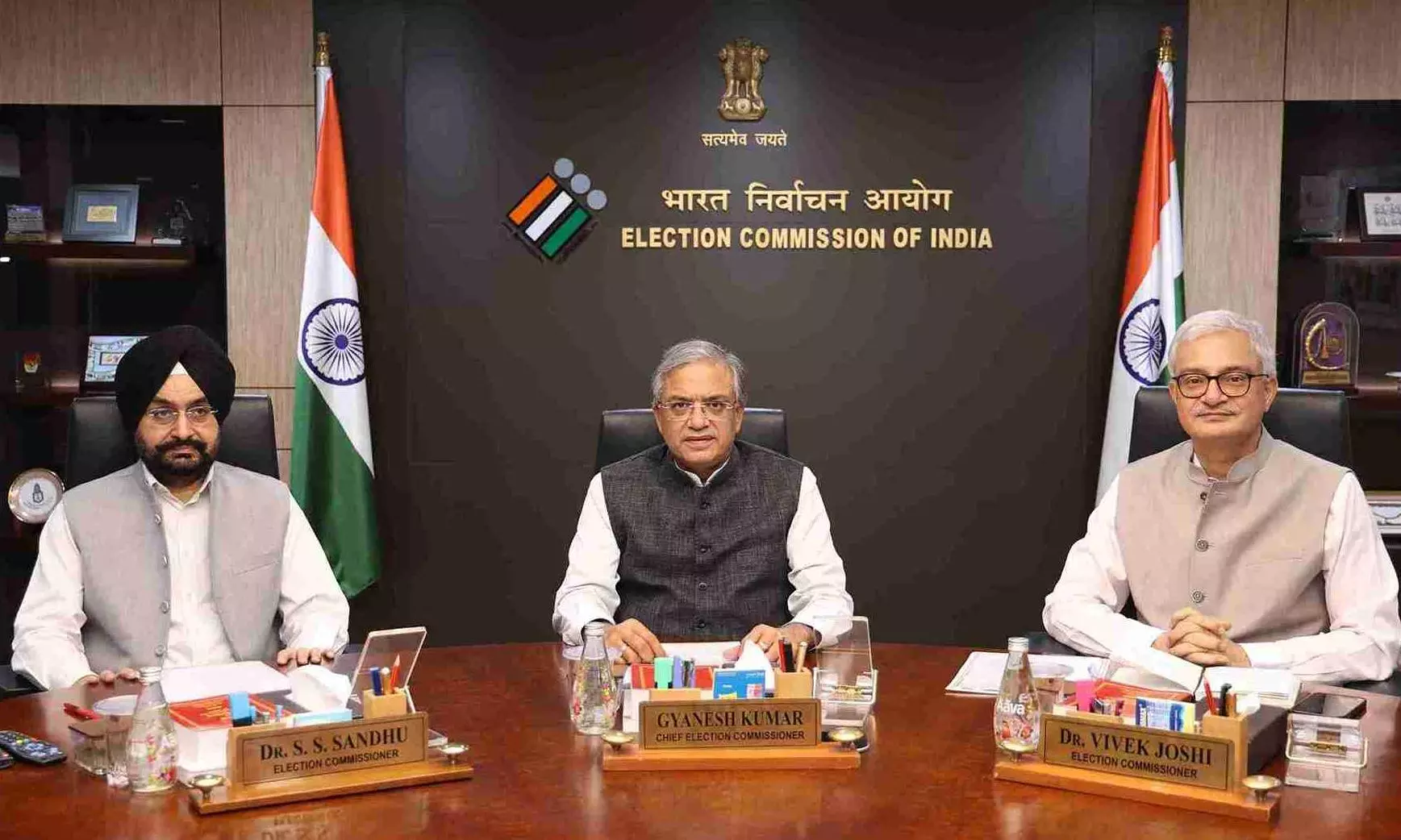
The recent Indian Express investigation into differences within the Election Commission has generated intense political debate. It is reported that Election Commissioners Sukhbir Singh Sandhu and Vivek Joshi recorded objections on at least 14 occasions over 10 months concerning Special Intensive Revision (SIR) of electoral rolls, voter registration, deletions, Form 6, electoral appeals, and the centralisation of electoral databases.
The EC, headed by Chief Election Commissioner (CEC) Gyanesh Kumar, responded that its actions were as per law and the media focus on internal notes only gives “one part of the picture”.
Citizens’ right to seek records
This raises a question: If these matters are contained in official records, can’t they be accessed under the Right to Information (RTI) Act?
This is not to question newspapers’ right to investigate. The larger issue is if the material involves the decision-making process by a constitutional authority, shouldn’t citizens and political parties have the right to seek the records through a statutory mechanism?
As a former Central Information Commissioner, this writer would approach the controversy by seeking the records. Section 2(f) of the RTI Act defines “information” broadly to include records, documents, memoranda, e-mails, opinions, advice, circulars, orders, reports, papers, and electronic data. The Act also gives citizens the right to inspect records and obtain copies or electronic information held by or under the control of a public authority.
Also Read: Why EC's reconciliation statement reads more like a confession
This distinction is crucial. An RTI applicant cannot ordinarily ask: “Why did the CEC ignore the two Election Commissioners?” That may require the public authority to create an explanation which doesn’t exist.
Instead, the applicant may ask the EC: “Provide the records showing how the objections of the two Election Commissioners were considered, and a final decision taken.”
Similarly, instead of framing the question on whether or not the CEC acted illegally, an applicant can seek the file noting, legal opinion, order, correspondence, or authorisation identifying the statutory provision under which the action was taken.
RTI plea can ask for the following
Per the Indian Express report, objections were recorded 14 times. A carefully-drafted RTI application could seek:
1) Copies of the recorded objections
2) Replies or comments on those objections
3) Minutes or records of the Commission’s consideration
4) The final decisions in each case
5) Whether each decision was unanimous or by majority
6) The statutory provision relied upon
7) Orders authorising changes to Form 6
8) Records concerning centralised electoral databases
9) Instructions governing access and modification of electoral data
10) Authorisations for appeals filed on behalf of the Commission
11) Relevant audit or technical reports
Need for transparency
This matters constitutionally because the EC is not an ordinary executive department. It is a constitutional authority under Article 324, entrusted with the superintendence, direction, and control of elections. That makes transparency in its institutional decision-making particularly important.
The controversy is not about whether the two Commissioners disagreed with the CEC. Dissent within a multi-member constitutional body is not itself illegality. What matters is: Was the full Commission consulted? Were decisions taken unanimously or by the majority? If there was a majority, was it respected? Was the particular administrative action authorised by law? Was the decision properly recorded and implemented?
The answers to these questions can be elucidated through documents.
Also Read: EC claims all SIR decisions unanimous; 'no explicit denial of charges,' says Congress
During this writer's tenure as Central Information Commissioner from 2013 to 2018, an important principle that came up repeatedly during RTI adjudication was: while the citizen is entitled to existing information, the public authority is not required to manufacture an explanation merely because the applicant wants one. That distinction is particularly valuable here.
The citizen need not ask the EC to explain the entire SIR controversy. They can ask for the records from which the explanation can be understood. This approach also prevents RTI from becoming a political weapon. The Administrative Law says, let the “records” speak.
What about the RTI amendment?
The present legal position is different from the period of this writer's tenure. Section 44(3) of the Digital Personal Data Protection Act, 2023 amended Section 8(1)(j) of the RTI Act, and that amendment was brought into force in November 2025. This makes careful drafting even more important. But the amendment does not mean that every record concerning the EC is exempt from disclosure.
There is a fundamental distinction between personal information about an individual elector and institutional information concerning how the EC exercises its statutory and constitutional functions.
Also Read: SC agrees to hear next week plea against EC decisions
The RTI applicant need not seek voters’ addresses, identity details, or other unnecessary personal data. The request can be confined to institutional records: orders, minutes, notes, authorisations, legal opinions, instructions, audit reports, and electronic records concerning the functioning of the electoral system.
Electronic system cannot override ERO
Any specific exemption claimed by the public authority must still be examined under the Act. The database question is especially important. The reported objections concerning centralisation of electoral-roll data raise an issue extending beyond SIR. Electoral registration is governed by statute.
Technology facilitates statutory functions; it cannot itself become the source of legal authority. If an Electoral Registration Officer (ERO) has a statutory responsibility, an electronic system cannot silently override that authority unless there is lawful authority for doing so.
Also Read: Who at EC ordered TCS to make 'illegal' change in Form 6? asks Rahul
An RTI application could therefore seek records asking: Who can access the database? Who can modify electoral entries? What authority permits such modification? Are modifications digitally logged? Can a central system override a decision of the competent electoral officer? Who audits these changes?
These are not questions about political preference. They are questions about institutional accountability.
Should political parties use RTI?
The Congress and other Opposition parties are demanding answers from the EC. Their political arguments would be strengthened if they only sought relevant documents lawfully. Instead of relying fully on the Indian Express report, they could ask the EC to disclose the records.
Also Read: EC dissent | Kapil Sibal on what SC must do: ‘Hope those shoulders are broad enough…’
If the EC claims that its decisions were unanimous, the minutes and decision records can establish that. For instance, if two commissioners constituted a majority, if the objections were subsequently resolved, or if a statutory procedure was bypassed, the records can establish them.
EC and CIC
The EC and the Central Information Commission do not have identical constitutional status or powers. The EC derives its primary authority from Article 324; the CIC is a statutory institution created under the RTI Act. But both institutions operate in areas wherein institutional independence, lawful decision-making, transparency, and public confidence are fundamental.
The EC administers the process of citizens’ democratic choice whereas the CIC gives citizens access to information.
Also Read: Form 6 flaws, past polls, other red flags: What EC dissent row has exposed
To get information, a newspaper may investigate, a political party may allege, a court may adjudicate. A citizen can seek public authority to disclose the records.
Therefore, the central question need not be, “Should the CEC resign?" or "Did the EC make a mistake?”. Rather, one can seek the records of those 14 decisions.