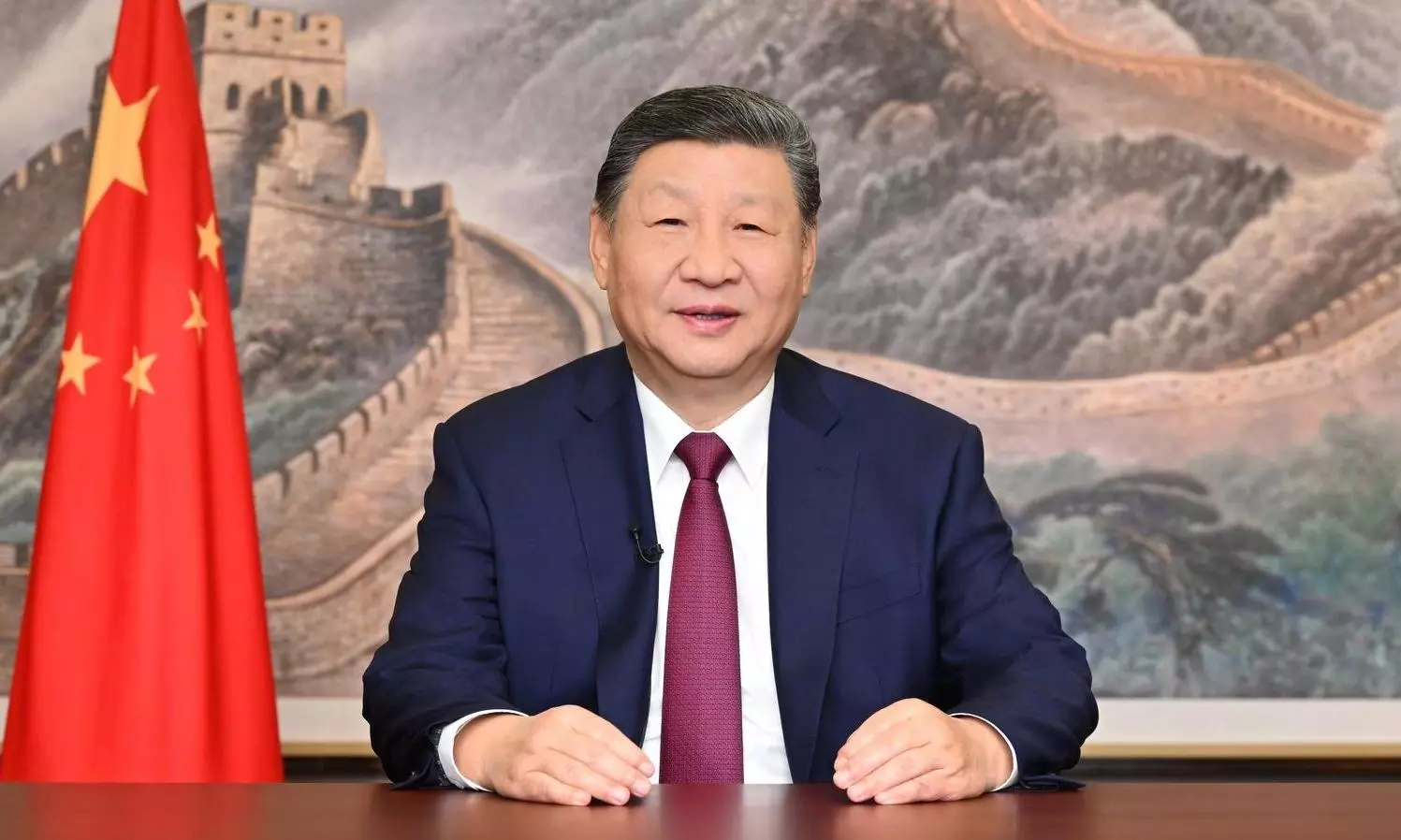
China’s season of purges: Xi cleanses ranks but faces isolation at the top
Sweeping expulsions within the CCP and military high command tighten Xi Jinping’s grip on power, but a thinning inner circle risks operational instability

China’s political future will be shaped between now and October 2027 by an intense "campaign season" that may pave the way for a major political transition in 2027.
The Fifth Plenum of the Chinese Communist Party (CCP) just ended in late October, setting the tone for the 21st Party Congress of the CCP due in October next year.
Plenums take place six to seven times between two party congresses, held every five years. Each plenum leads to decisions on leadership, ideology, party discipline, and major economic policies.
The first plenum confirms the new leadership at the start of the new party congress, while the last plenum approves the work report in preparation for the next party congress. They are more routine, whereas real political manoeuvres occur between the second and sixth plenums.
Also read: Midterms make Trump admin ‘lame duck’: How it impacts India-US trade, immigration
The Fifth Plenum in 2015 approved the 13th Five-Year Plan and quietly ended the one-child policy. The Sixth Plenum in 2021 adopted a historical resolution that essentially placed Xi Jinping alongside Mao Zedong and Deng Xiaoping ahead of Xi’s third term as the Supreme Leader.
Unlike many historical fifth plenums — which typically focus on multi-year economic planning — the 2026 meeting focused heavily on Party governance, discipline, and anti-corruption, because economic guidelines for the 15th Five-Year Plan (2026–2030) were already addressed in the Fourth Plenum.
In 2024, the Third Plenum stripped former foreign minister Qin Gang of his Central Committee seat. The Fourth Plenum in 2025 ratified the expulsion of nine senior officials, among them Central Military Commission vice chairman He Weidong.
Purges rampant
The recurring theme in the Third to Fifth plenums over the last few years has been the purges unleashed by Xi Jinping and how to legitimise them. In short, it involves Xi's frantic sweeps to reinforce his grip on power. This is especially significant after a period of intense purges within the CCP and the People’s Liberation Army.
Some would even compare Xi's purges in the Party and army with similar purges by Stalin, which left the Soviet military in bad shape on the eve of the German invasion in 1941.
The latest reported investigation into former Chongqing mayor Huang Qifan, eight years after his retirement, indicates that even after stepping down, leaders can be hauled over the coals if they are seen as a threat to the Supreme Leader.
The recently concluded Fifth Plenum adopted a major resolution focused on persevering with full, rigorous self-governance, anti-corruption efforts, and internal discipline enforcement. It addressed execution gaps, formalism, and bureaucratism within party ranks.
Also read: Hasina's return and garment wage revolt put Bangladesh on edge
The session dealt with ongoing disciplinary investigations and expulsions affecting members of the Central Committee, particularly within the People's Liberation Army (PLA) high command.
It was expected that President Xi Jinping would get the Fifth Plenum to approve his wide-ranging purges, especially within the Communist Party. Not only did that happen, but the Plenum also okayed Xi's "party cleansing" aimed at eliminating challenges to his leadership in the party and the army. It is now abundantly clear that Xi Jinping intends to serve a fourth term and continue until 2032.
The recent flurry of purges targeting the military in particular arrived before this Fifth Plenum. Those who fell included former Central Military Commission (CMC) Vice Chairman Zhang Youxia and former Joint Staff Department Chief Liu Zhenli, who were charged with "seriously trampling on and undermining" the military system of ultimate responsibility. They appear to have been accused — more severely than usual — of political disloyalty alongside corruption.
Huge expulsions
During the Chinese Communist Party's fifth plenary session, 33 Central Committee members were officially expelled — 16 of whom were high-ranking military officials — dropping total attendance down to a historic low of 279 members. These removals have heavily depleted the CMC, leaving only Xi Jinping and a minimal number of remaining members in active leadership roles.
The campaign has targeted previously insulated areas, including the PLA Air Force, the Cyberspace Force, and procurement/equipment development networks, alongside regional commanders such as former Western Theater Commander General Zhao Zongqi.
Also read: US midterm polls: Meet Indian-Americans who won
Under Xi's influence, the ruling Communist Party has framed these sweeping actions as an anti-corruption crusade and a push for absolute party discipline. However, analysts note that stripping out experienced leaders risks short-term operational disruption, potential delays regarding Taiwan contingencies, and heightened command uncertainty.
Xi’s trusted circle is thinning out, with dismissals outnumbering inclusions and sweeping promotions followed by very few replacements. China-watchers say Xi will have to find new loyalists to take the place of those expelled if he is to avoid risking isolation at the top.
Some would even compare Xi's purges in the Party and army with similar purges by Stalin, which left the Soviet military in bad shape on the eve of the German invasion in 1941.
No specific charges
The Communist Party has not revealed specific charges against the party members, dismissing them as responsible for "serious disciplinary and legal violations". Such broad allegations have become a recurring feature of Xi's anti-corruption campaign.
It has now become "an effort to consolidate and maintain authority", says Chong Ja Ian, a non-resident scholar with Carnegie China. "In this case, the campaign will continue and expand depending on how secure Xi feels rather than any real issue with corruption."
In its statement, the party said it has "squarely confronted the grim reality that party leadership had at times weakened or hollowed out" and that it will continue to "enforce strict party self-governance, including turning the knife inwards to... curb disorder".
The latest expulsions bring the total number of Central Committee members removed under Xi's third term to a record 51, up from 35 and five in his first and second terms respectively.
Beyond the plenum, China's top anti-corruption watchdog reported that 680,000 people across the party apparatus have been disciplined in the first nine months of this year.
This is also the first time in Xi's 14 years of leadership that plenum attendance fell below 300. The current Central Committee started its term in 2022 with more than 370 members.
Xi’s trusted circle is thinning out, with dismissals outnumbering inclusions and sweeping promotions followed by very few replacements. China-watchers say Xi will have to find new loyalists to replace those expelled if he wants to avoid risking isolation at the top.