Rahul Gandhi’s Pune strategy: Why women students are drawing attention
The next edition of Chhatron ki Goonj is focused on Gen Z women, aiming to channel youth discontent into a new electoral voice to counter freebies and doles

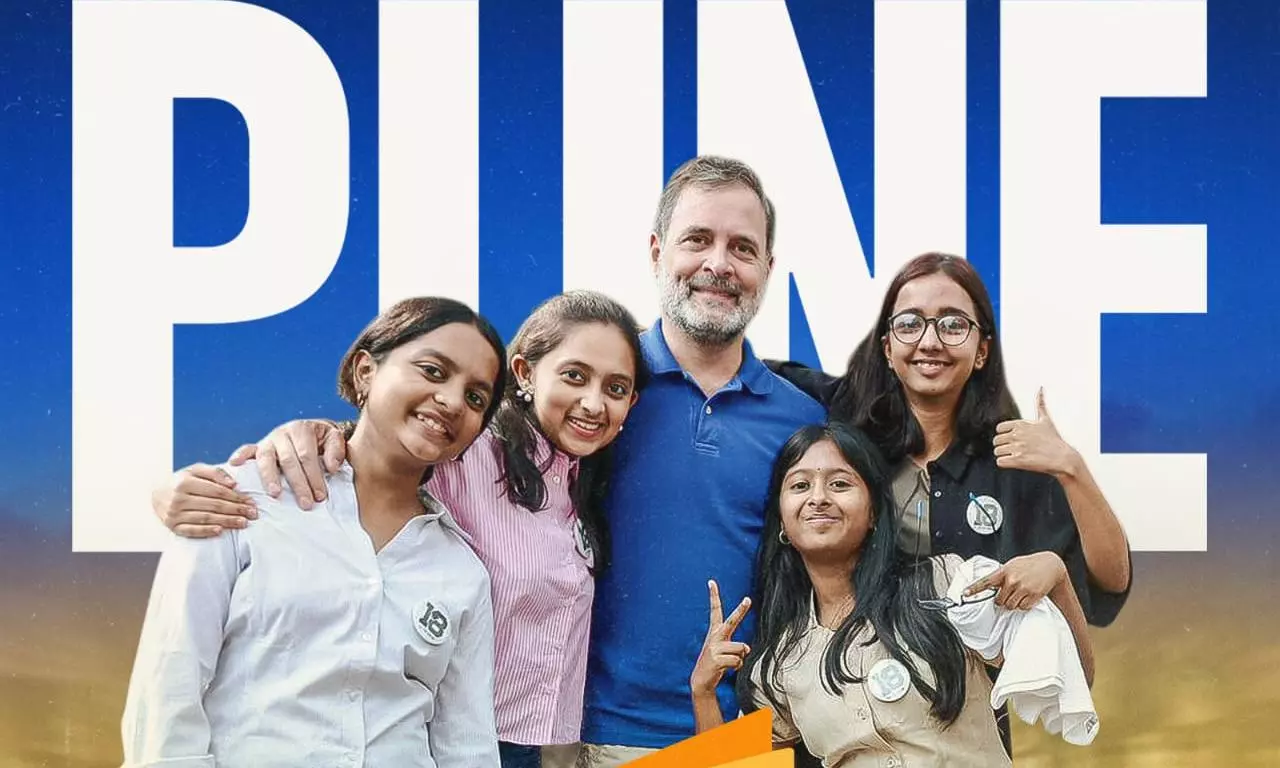
In Pune, the next destination of Rahul Gandhi's Chhatron ki Goonj (Voice of Students) campaign, there's a change in format. The interaction, slated for August 22, is going to be exclusively for women students.
Why so? Congress men have no clear answer, with insiders pointing to Rahul’s obvious and oft-repeated commitment to women empowerment and emancipation. But, in Maharashtra, women are already more empowered than their counterparts in several other parts of the country.
Also read: Rahul Gandhi announces next ‘Chhatron Ki Goonj’ event in Pune on August 22
Rahul himself justified it, saying women's voices should be specifically heard. “The courage and resilience with which India’s youth have stood firm against Prime Minister Narendra Modi ji’s violent regime and demanded accountability is commendable,” he said. "They raised their voices with peace, love, and humour.”
Women students faced “misbehaviour, verbal abuse, and violence” by BJP supporters, he alleged, adding that some girls were even forced to apologise to the Prime Minister. “But now their voices cannot be silenced,” he said. "Chhatron ki Goonj is arriving in Pune and, this time, the event will be exclusively for girls. Now the girls will speak, and the country will listen."
While that is indeed a noble thought, there could be other factors at play, too.
Beyond empowerment
A BJP-led government is now well ensconced in Maharashtra. It came to power in late 2024, riding on the wave of the Ladki Bahin Yojana scheme for women launched just before the assembly elections.
The scheme offers a Rs 1,500 montly dole to all women residents of the state aged 21-65, who have a combined annual family income of less than Rs 2.5 lakh.
The move is credited with bringing the NDA to power in Maharashtra in 2024 despite a poor showing by all its constituents in the Lok Sabha polls held just months before. It appears that the Ladki Bahin scheme made the difference.
Women voters matter
The Maharashtra win spurred the BJP to repeat the trick in Bihar last year. It succeeded in mopping up women's votes, which constitute nearly half the total. Subsequently, the Ladki Bahin model was repeated in Delhi, again with a good result.
It is not that the BJP’s rivals did not try to counter this move with similar schemes. But, in Maharashtra and Bihar, a direct benefit transfer (DBT) carried out just before the poll date made a palpable impact. The Opposition was not in a position to match this simply because it was not in power.
Also read: Rahul launches ‘Ask Me Anything’ outreach on Instagram, invites Gen Z students
From the political parties' point of view, openly transactional electoral politics can make a big difference. No party or leader is unaware of this, and it could hold true for Rahul Gandhi, too.
A separate discussion could perhaps instill confidence in young women learners, so that they opt for jobs and vocation over paltry doles with an eye on their votes.
The quota debate
The BJP’s push to woo women is not confined to doles. A Nari Shakti Vandan Adhiniyam was enacted through a constitutional amendment in 2023 to reserve 33 per cent seats in Parliament and state legislatures. The government has fished this Bill out for a possible reenactment by linking it to the delimitation exercise.
The government and the Opposition are engaged in a raging debate over the laws, taking diverse stands.
Strangely, the warring parties have so far hardly tried to elicit the views of women in any open forum and discernible form. In fact, the segregation between the sexes on important public matters still persists. This may not be very encouraging for most women or their growth as a social entity.
Gen Z women on the streets
The fact that the young among them have been more restive than their older counterparts became visible when hordes of female students joined the recent and still ongoing protests by parties and civil society members or their outfits against recent paper leaks.
Also read: '152 exam paper leaks in 10 years', says Rahul, slams Centre over student crisis
It is this discontent among young women that Rahul Gandhi seems to have taken note of, spurring him to hold a separate public discussion with them, beginning from Pune. One can only hope this sets the trend for better political engagement with young women going forward.
Meanwhile, Pune police have imposed restrictions on large public gatherings in view of upcoming festivals (Id Miladun Nabi and Rakshabandhan) and political rallies in the city. These curbs came into force on Tuesday and will continue until August 31. The Congress is yet to react to this.
Earlier, Rahul's students' rallies in Kota, Dehradun and Prayagraj had faced bureaucratic hurdles though the events finally took place on schedule.